
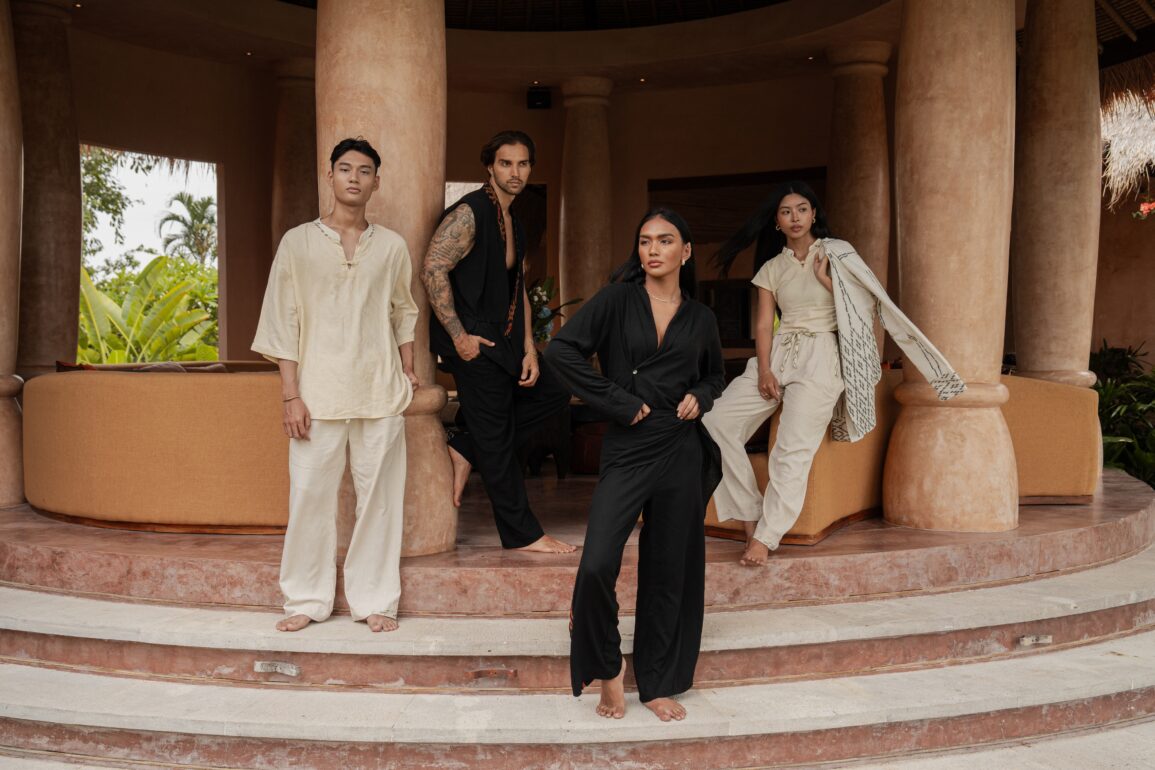

Every Thursday, in a small village in Central Java, the week’s weaving makes its way to Aris’s house. Fifteen families bring over what they’ve made on the hand looms set up outside their own front doors, and the cloth is gathered, sorted and readied for its next stop: a family of tailors in rural Bali.
Some of it is Zaki’s. At 20, he’s one of the few people his age in the village who hasn’t left for the city. Ask him why, and the answer comes easily.
“I come from a family of weavers, and I take great pride in it,” he says. “I grew up learning from a young age, and I feel like it’s my purpose. I want to continue holding up the tradition, because it makes me proud.”
That cloth becomes the co-ords, two-piece sets and hooded capes of HAYAQI, the Bali slow fashion label founded by Aaqib Hasnain and Livy Von Goh. If you’ve browsed the last two editions of Boutiques Fair Singapore, there’s a good chance you’ve already run your fingers over it. We wanted to know who makes it, and what it takes to keep a craft like tenun ikat going when so many young people are heading the other way.
First, What is Tenun Ikat?
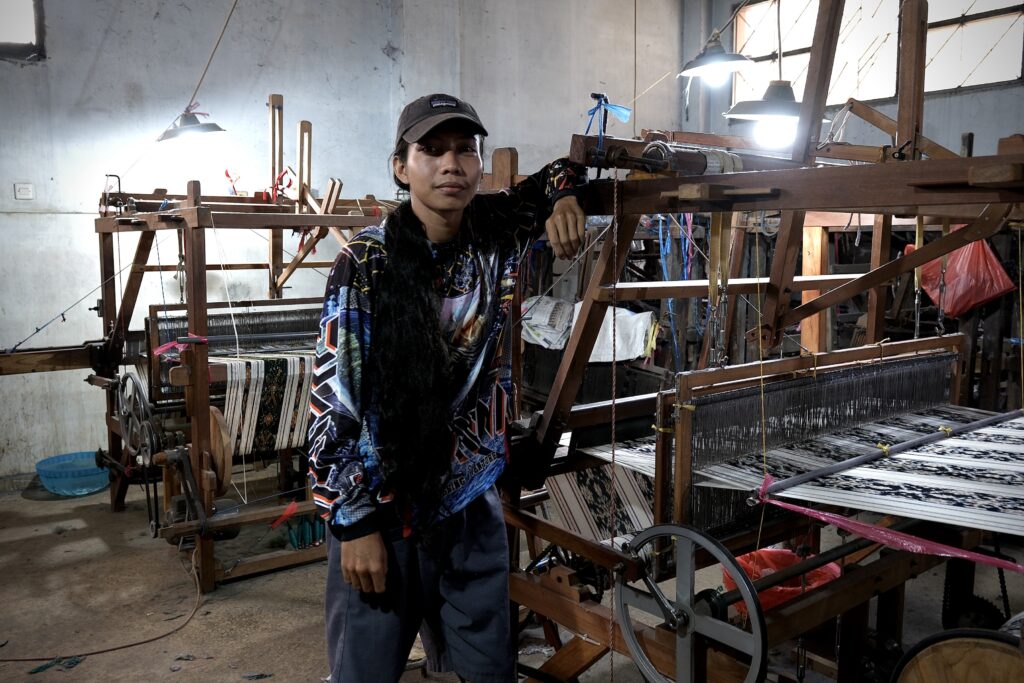
If you’ve ever admired an ikat pattern and assumed it was printed, you’re not alone. Tenun ikat is an Indonesian weaving technique in which the threads are tied and dyed before they reach the loom, so the pattern lives in the yarn itself. Tenun means weaving in Bahasa Indonesia, and ikat comes from the word for “to tie”.
Every corner of the archipelago has its own take. Sumba is known for big, bold cloths of crocodiles, roosters and crayfish, with the pattern tied into the lengthwise threads. In Tenganan, a village in eastern Bali, weavers tie and dye both sets of threads to make double ikat, one of the rarest forms of the craft anywhere.
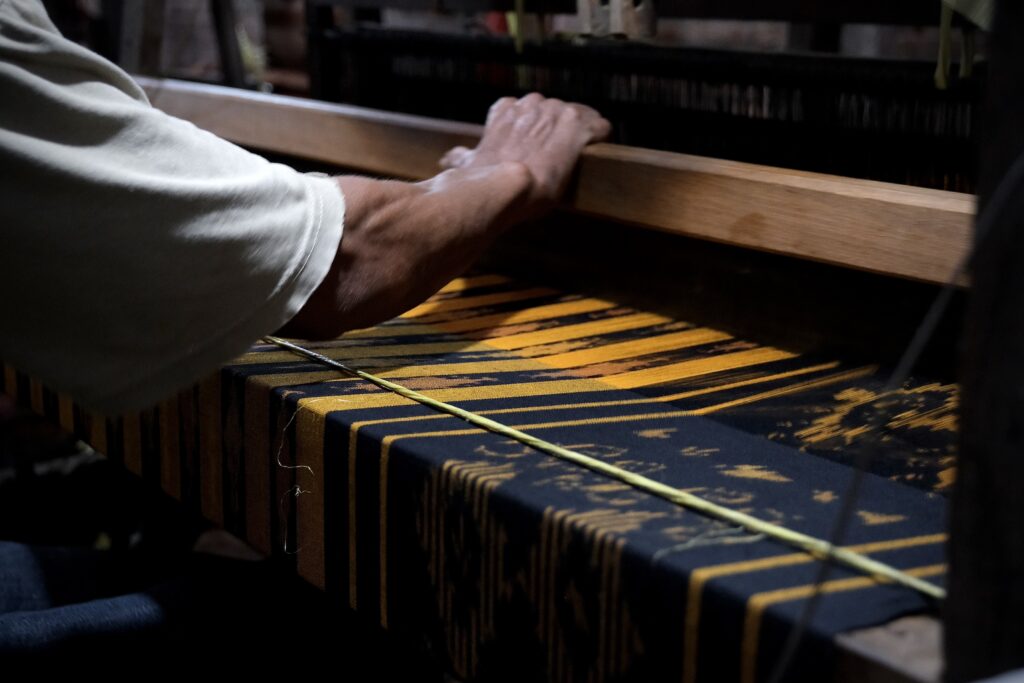
HAYAQI’s weavers work in weft ikat, where the pattern sits in the crosswise threads. They weave on ATBM looms (alat tenun bukan mesin, literally “non-machine loom”), wooden hand looms worked entirely by hand and foot. It’s slow, patient work, and it goes something like this:
- Tie (ngani and mengikat): the threads are stretched across a wooden frame the width of the finished cloth, and sections are bound tightly with raffia or plastic cord so the dye can’t reach them.
- Dye (pewarnaan): the bundles are dyed by hand, one colour at a time. Every new colour means tying, dyeing and untying all over again.
- Wind (kelos): once dry, the threads are wound onto shuttles in the exact order the pattern needs.
- Weave (penenunan): at the loom, the weaver adjusts the tension by hand with every pass of the shuttle, coaxing each motif into line.
Small shifts in tone and edge come with the territory. No two pieces turn out quite the same, and that’s rather the point.
The Woman Who Holds the Pattern
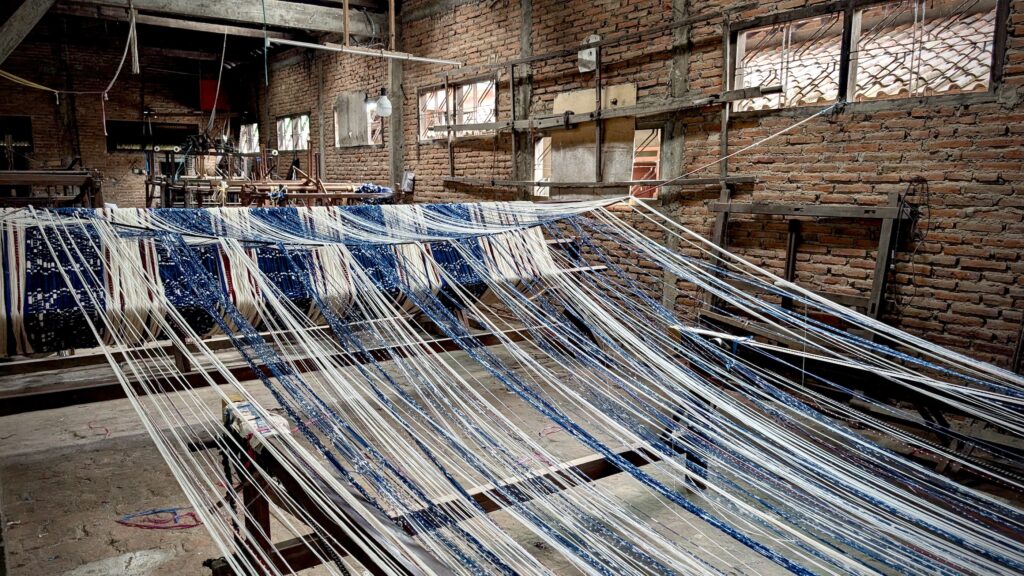
Before any of that can happen, someone has to see the whole design in their head. In the village, that someone is Ibu.
Ibu is a respectful way to address a woman in Indonesia, much like “Madam”, and it’s how the founders refer to the designer at the heart of HAYAQI’s ikat. She prefers to stay out of the spotlight, so we’ll let her work do the talking. She plans each motif, ties the threads and chooses the colours, working out exactly how a pattern will fall across the finished cloth long before it’s woven.
“One misplaced tie shows up in the finished cloth, so holding an entire pattern in your head like this takes years of experience,” say Aaqib and Livy. When the weavers and the founders settle on a traditional design together, it’s Ibu who translates it into thread, and her eye for colour shapes how every piece looks.
A Village That Learned to Weave Together
The founders found the weavers through Aris, a young man who represents his village. They had spent a long time searching for weavers who still work the traditional way, rather than relying on printing or fully automated machines. When they finally reached out, Aris patiently walked them through the whole process.
Back then, every family wove its own designs. It sounds charming, and it was hard on business. “Previously, everyone did their own thing, and this resulted in a small amount of very different styles, which made it difficult for the weavers to sell their weaves,” says Aris. “We relied much more on people coming to our village to buy on the spot.”
With HAYAQI’s support, Aris brought the families together into an informal collective. Everyone still works freelance, with one to three hand looms per household, but they now weave shared designs side by side. That means bigger orders, steadier work and, yes, those Thursday gatherings at his place.
“Now, we are able to work together, produce collectively, streamline pricing, and earn and grow our work together,” he says. HAYAQI is the group’s largest customer, paying a pre-agreed flat price for each 2.2m by 1.1m length of ikat, so every weaver earns the same for the same work. The rest of the year brings government projects and one-off orders around festive seasons like Eid.
Keeping Tenun Ikat Alive: Why Some Weavers Stay
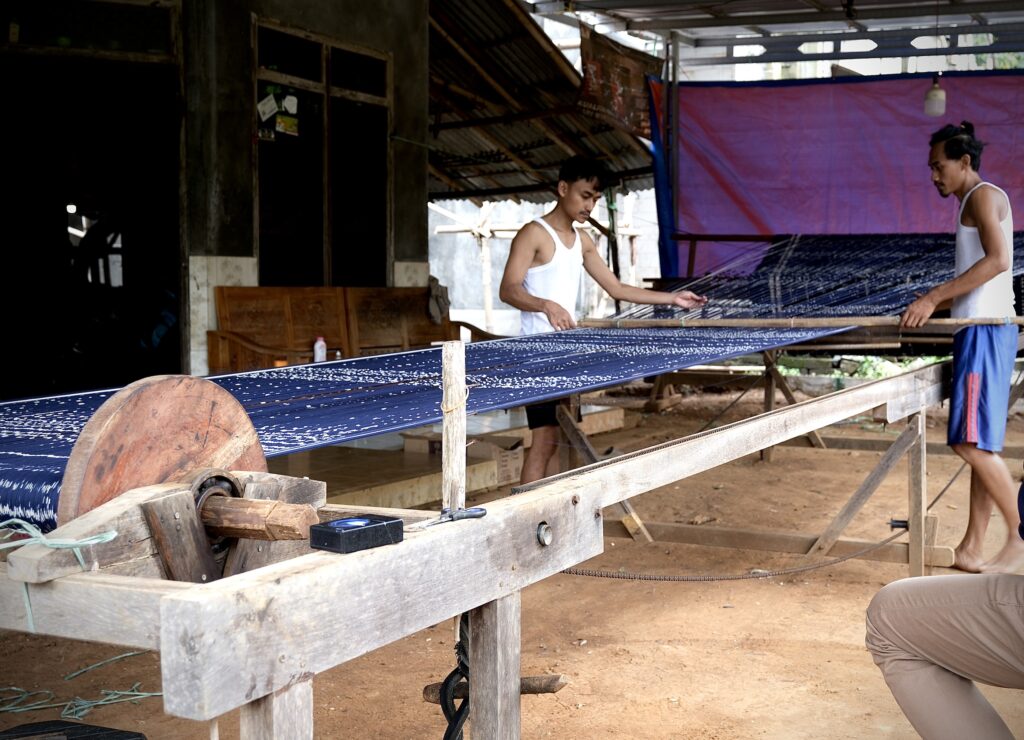
Not everyone in the village sees a future at the loom, and Rohim has watched that shift up close. “Less and less young people are keeping the art of weaving up,” he says. “We see more of them leaving to the city for studies and work, and that worries me. We need to keep this tradition alive.”
So what keeps him going? Seeing the cloth out in the world. “When I see people wearing what we have created, it makes me really proud,” he says. “Especially when I see artists, and people with influence wearing it. It allows us to be seen across the world, and that is special.”
That pride is behind the moment Aaqib and Livy say has stayed with them the most. After they had interviewed Rohim in the village, he came looking for them, simply to say thank you. He told them how happy and proud he felt that someone had come to document the weavers and their process, and that their work would be shared with the world.
“We often talk about preserving a craft, but hearing it from the person whose hands make the cloth reminded us why we started,” they say.
Zaki, for his part, reckons part of the answer is already in his generation’s pockets. Asked what would keep more young people weaving, he points to education and social media. “With TikTok and Instagram, we now have an opportunity to showcase our work all over the world, and feel the pride from this ancient tradition that has been in our culture for generations,” he says.
From a Javanese Loom to a Bali Workshop
Once the week’s weaving leaves the village, it heads to Tabanan, a rural regency in Bali, where Pak Komang and his family turn it into clothing. Pak Komang handles prototypes, pattern making and grading, while the rest of the family each take a stage: an aunt might do the cutting while an uncle sews. At the end of the line, he and his wife check every finished piece together.
All in, it takes about two months to go from thread to finished garment. Count the four to six months it takes for the cotton to grow, and HAYAQI puts the full journey from soil to skin at closer to seven months.
The designs stay close to home, too. HAYAQI works only with traditional Indonesian patterns the weavers have woven for generations, mapped out together with Aris. A few reach across the archipelago: the Sambal co-ord carries the naga, or dragon, a Sumba motif the founders associate with power and abundance, while Jamu features the rooster, a symbol of wisdom that wakes before we do to announce the new day. Other pieces draw on the traditions of Kalimantan, Lombok and Sulawesi.
“Honouring a motif starts with understanding it before we use it,” say Aaqib and Livy. “We stay with traditional designs rather than inventing new patterns that only look traditional, and we are open about the fact that these pieces are woven by our weavers in Central Java, inspired by other islands. Ikat connects the whole archipelago, and we see our work as one way of keeping those stories alive and in circulation.”
Jamu and Sambal, two of the very first designs from HAYAQI’s debut RASA collection, will soon be retired to keep each run limited. For the weavers, the founders say, it’s a new chapter rather than an ending, as they move on to the next designs they’re developing together.
Putting Down Roots With AKAR
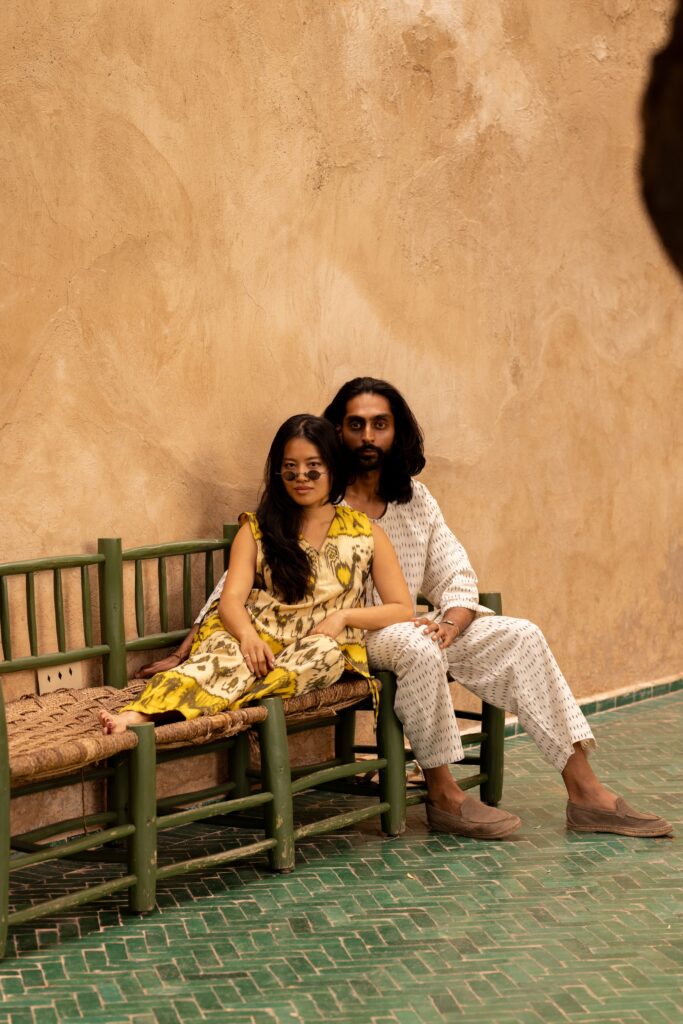
HAYAQI’s newest collection, AKAR, launched on 16 November online and at the brand’s boutique on Jalan Hanoman in Ubud. Akar means “roots” in Bahasa Indonesia, and the collection takes its cue from the banyan tree, whose aerial roots grow down to make a new home wherever they touch the ground. It’s a fitting image for two founders who have always lived between places.
This time, ikat plays a supporting role. The nine-piece capsule of separates for men and women, plus a few unisex pieces, uses handwoven tenun as accents: framing a pocket, lining a collar or forming an asymmetric panel against easy fabrics like linen. The pieces are designed to go from Singapore’s humidity to a long-haul flight to a city evening, and every one is still sewn by Pak Komang’s family in Tabanan.
The founders are refreshingly upfront that AKAR uses less woven cloth per piece than RASA, which carries on with new full-ikat designs. The hope is that it brings handwoven ikat into more everyday wardrobes, and that some of those new fans go on to discover RASA. “The more people who know and love tenun ikat, the stronger the future for the weavers,” they say.
And for those of us in Singapore, a HAYAQI pop-up is on the cards for next year. Nothing is confirmed yet, but we’ll be keeping an eye out.
So what do Aaqib and Livy most want you to know about the people behind the cloth?
“That they are families, not factories,” they say. “Fifty-five weavers across fifteen households, working on hand looms outside their own front doors, and gathering at Aris’s home every Thursday to bring the week’s weaving together. Every slight variation in a piece is the mark of a person’s hands. The craft is also at a turning point: young people are leaving for the cities, and weavers like Zaki and Rohim are choosing to stay. When you wear handwoven ikat, you become part of the reason that choice is still possible.”
It’s worth remembering the next time you pick up something handwoven. Somewhere, a Zaki or a Rohim chose to stay at the loom, and an Ibu held the whole pattern in her head before a single thread was dyed.
If you’d like to bring a piece of their work home, City Nomads readers get 10% off their order at hayaqi.life with the code “CITYNOMADS10”. It’s a lovely excuse to explore AKAR, or to get your hands on a RASA favourite before Jamu and Sambal are retired for good.
Curious about how HAYAQI began? Catch our earlier conversation with Aaqib, From Google to Groove: HIMMAT’s Journey Through Courage, Music and Mindfulness.
Address: Jalan Hanoman 16, Ubud, Gianyar, Bali
Website: hayaqi.life
Frequently Asked Questions (FAQ)
Tenun ikat is an Indonesian weaving technique in which threads are tied and dyed before weaving, so the pattern is formed in the yarn rather than printed onto the cloth.
Batik is decorated by applying wax to finished cloth before dyeing. Ikat is patterned by tying and dyeing the threads before they are woven.
Threads are tied with raffia or plastic cord, dyed by hand one colour at a time, wound onto shuttles in pattern order, then woven on a hand loom.
HAYAQI’s tenun ikat is handwoven by 55 weavers from 15 families in a village in Central Java, and sewn into garments by a family workshop in Tabanan, Bali.
About two months from thread to finished garment, or around seven months including the time it takes to grow the cotton.
HAYAQI sells online at hayaqi.life and at its flagship boutique on Jalan Hanoman in Ubud, Bali.