

TLDR
Key Takeaways
- Kathmandu offers a blend of ancient kingdoms: Kathmandu, Patan, and Bhaktapur, perfect for exploration.
- A 4-day itinerary allows you to experience the city’s cultural richness and natural beauty, focusing on key attractions.
- Expect seasonal variations: visit from September to November or March to May for the best weather and views.
- Stay in Thamel for a bustling atmosphere or choose quieter areas like Boudhanath for a more spiritual experience.
- Key sites include Boudhanath Stupa, Pashupatinath Temple, and the vibrant Patan Museum.
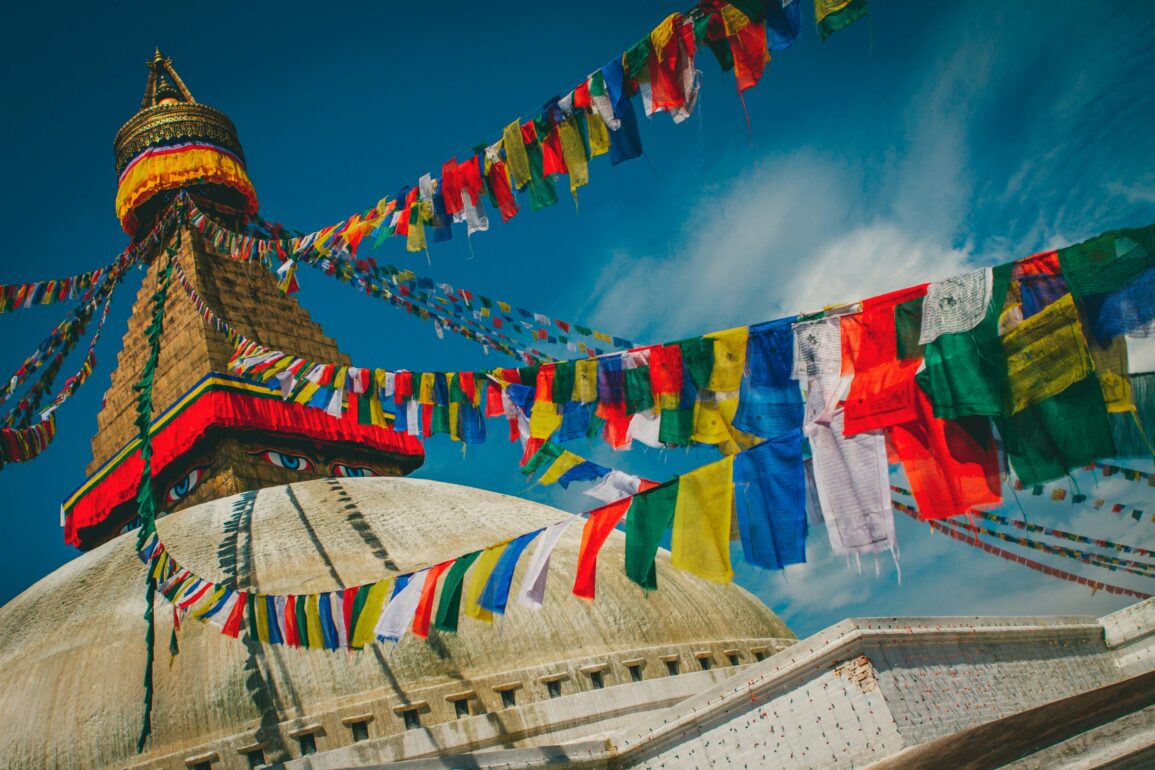
Kathmandu is where most journeys into Nepal begin and end. Sitting at around 1,400 metres in a valley ringed by the Himalayas to the north and the Terai lowlands to the south, it’s less a single city than a cluster of ancient kingdoms, Kathmandu, Patan and Bhaktapur, that have grown into each other over centuries. Temple bells compete with car horns, prayer flags flutter over internet cafés, and a five-minute walk can take you from a UNESCO World Heritage square to a rooftop serving flat whites.
This 4-day, 3-night itinerary is built for travellers using Kathmandu as their base, whether that’s a standalone city trip or the bookend to a trek into the Himalayas, from the classic Everest and Annapurna routes to quieter options like Manaslu circuit trekking. It’s paced to leave room to wander rather than tick off a checklist, which, in a city where traffic alone can eat an hour, matters more here than almost anywhere else in Asia.
Before Your Trip: What to Know
Nepal’s political situation shifted significantly in September 2025, when youth-led protests over corruption and a brief social media ban led to serious unrest in Kathmandu and other cities, including damage to several hotels and government buildings. An interim government took over, and a general election was held on 5 March 2026. As of writing, the security situation has stabilised and tourism infrastructure, including Thamel, Patan, and the main trekking regions, is operating normally. Demonstrations can still flare with little warning, though they tend to concentrate around specific government districts rather than tourist areas. As with any destination that’s had recent unrest, check your government’s current travel advisory before you go, and keep half an eye on local news during your stay.
Kathmandu follows a clear seasonal rhythm: September to November (autumn, the busiest season, mild days and clear mountain views), December to February (cold, dry, can drop below freezing at night but still pleasant by day), and March to May (spring, the second peak season, warm with clear skies). June to August is monsoon, hot, humid, and best avoided unless you don’t mind rain delays. For fewer crowds without sacrificing weather, aim for late November, December, or March.
Before Your Trip: Where to Stay
Most visitors base themselves in Thamel, Kathmandu’s tourist and nightlife hub, dense with guesthouses, trekking outfitters, restaurants, and bars, all walkable. It’s convenient but can feel chaotic if you’re not after that energy.
For something quieter with easy access to Kathmandu’s spiritual heart, Boudhanath puts you steps from the stupa itself, with a slower, more contemplative pace and a strong café scene. If you’d rather stay somewhere with genuine architectural pedigree, The Dwarika’s Hotel in Battisputali is a heritage property built from salvaged traditional Newari woodwork, and it’s a destination in its own right even if you’re not staying there (more on that below). In the heart of Thamel, Dalai-la Boutique Hotel and Kasthamandap Boutique Hotel remain consistently well-reviewed mid-range options with genuine local character.
Day 1: Thamel and Kathmandu’s Ancient Core
Start in Thamel itself. It’s the city’s tourist nucleus, a tangle of bookshops, trekking gear stores, and restaurants, and however touristy it feels, it’s genuinely useful for last-minute gear, SIM cards, and orientation. Expect the odd tout, mostly harmless, easily waved off.
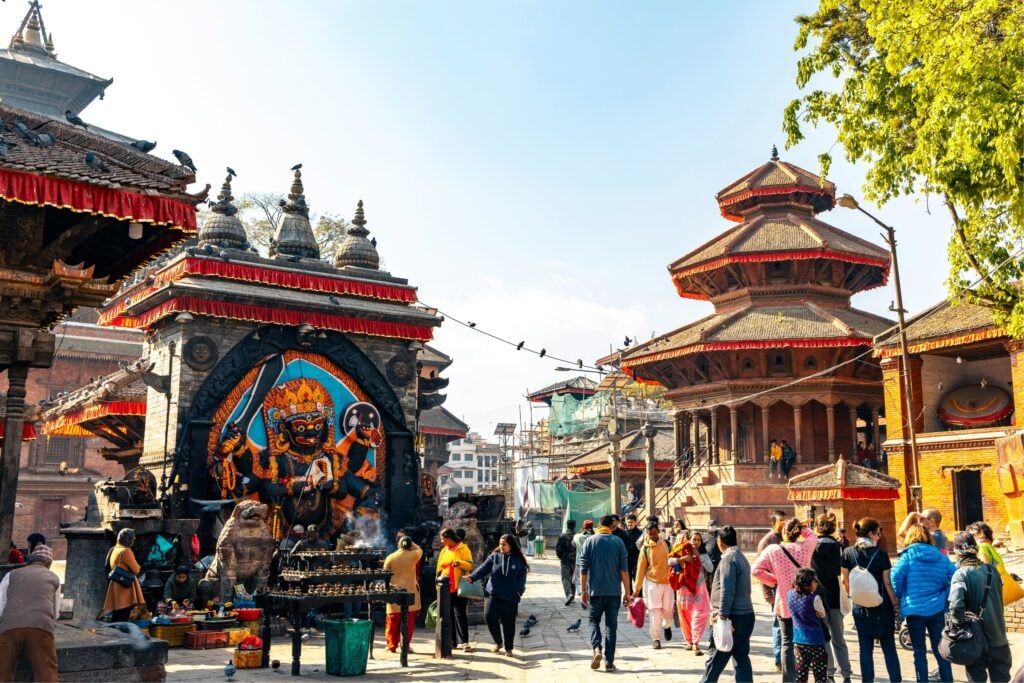
From Thamel, walk south into Kathmandu Durbar Square, one of Nepal’s most significant heritage sites and, along with Patan and Bhaktapur’s own Durbar Squares, part of a joint UNESCO World Heritage listing. Much of the square was damaged in the 2015 earthquake, and restoration has been ongoing since, so expect a mix of original centuries-old structures and newer reconstruction work. It’s also home to the Kumari Ghar, residence of the Kumari, Kathmandu’s living goddess, a young girl worshipped as a deity until she reaches puberty.
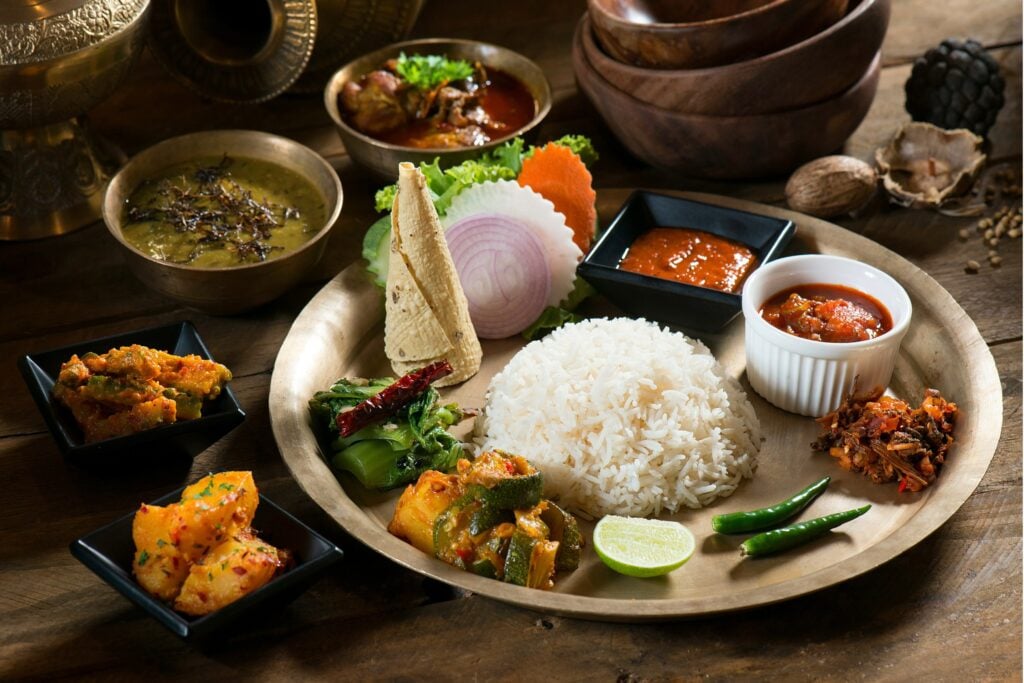
For lunch, Yala Cafe & Coffee Shop in Thamel is a warm, plant-filled spot known for its Nepali thali sets and genuinely friendly service, a good introduction to local flavours without straying too far from Thamel’s centre. In the evening, Jasper Restaurant, tucked down a quiet alley off Thamel’s main strip, has quietly become one of the highest-rated restaurants in the city, a multi-cuisine spot spanning Nepali thakali sets, momos, and Japanese and Italian plates, with a cosy, low-lit dining room that’s easy to linger in.
Day 2: Boudhanath and Pashupatinath
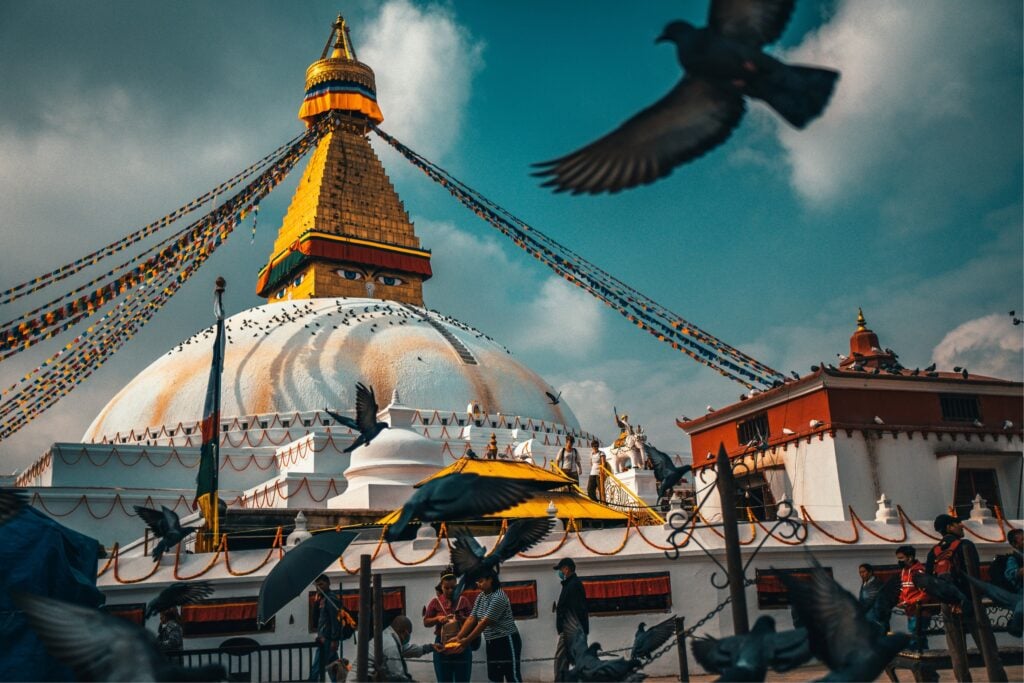
Dedicate today to Kathmandu’s two most significant religious sites, on opposite ends of the spiritual spectrum. Start at Boudhanath Stupa, one of the largest Buddhist stupas in the world and the centre of Kathmandu’s Tibetan community. Walk the kora (the pilgrim circuit around the stupa) clockwise alongside monks and pilgrims, then explore the surrounding monasteries, most of which welcome visitors.
Start the morning at Utpala Cafe, a short walk from the stupa, a genuinely excellent vegetarian and vegan spot doing everything from Nepali sticky rice sets to spiced chilli momos in a calm, garden-facing courtyard.
In the afternoon, head to Pashupatinath Temple, one of the most important Hindu temple complexes dedicated to Shiva anywhere in the world, and the site where devout Hindus in Nepal are cremated on the banks of the Bagmati River. It’s a solemn, deeply active place of worship rather than a photo opportunity, sadhus, mourners, and monkeys share the grounds, and visitors should dress and behave accordingly.
For dinner, loop back to Boudha for Cafe De Mandala, a small, quietly beloved spot right by the stupa (4.9 on Google Maps) that does an excellent Nepali breakfast-for-dinner and paneer momos in an unhurried, candlelit courtyard setting, a nice contrast to the intensity of the afternoon.
Day 3: Patan, Nepal’s City of Fine Arts
Just south across the Bagmati River, Patan (Lalitpur) is technically its own city, and one that rewards a full day. Its Durbar Square rivals Kathmandu’s for architectural density, with the added benefit of the excellent Patan Museum, widely considered one of the best-curated museums in South Asia, housed inside a former royal palace.
Patan is also known as Nepal’s traditional centre for metalwork and fine arts, wander the surrounding lanes for workshops still producing bronze statues and repoussé work using centuries-old techniques. For lunch, Patan Heritage Home & Restaurant sits inside a genuine Newari heritage courtyard just off the square, serving momos and thali sets on a rooftop that looks straight over Patan’s temple spires.
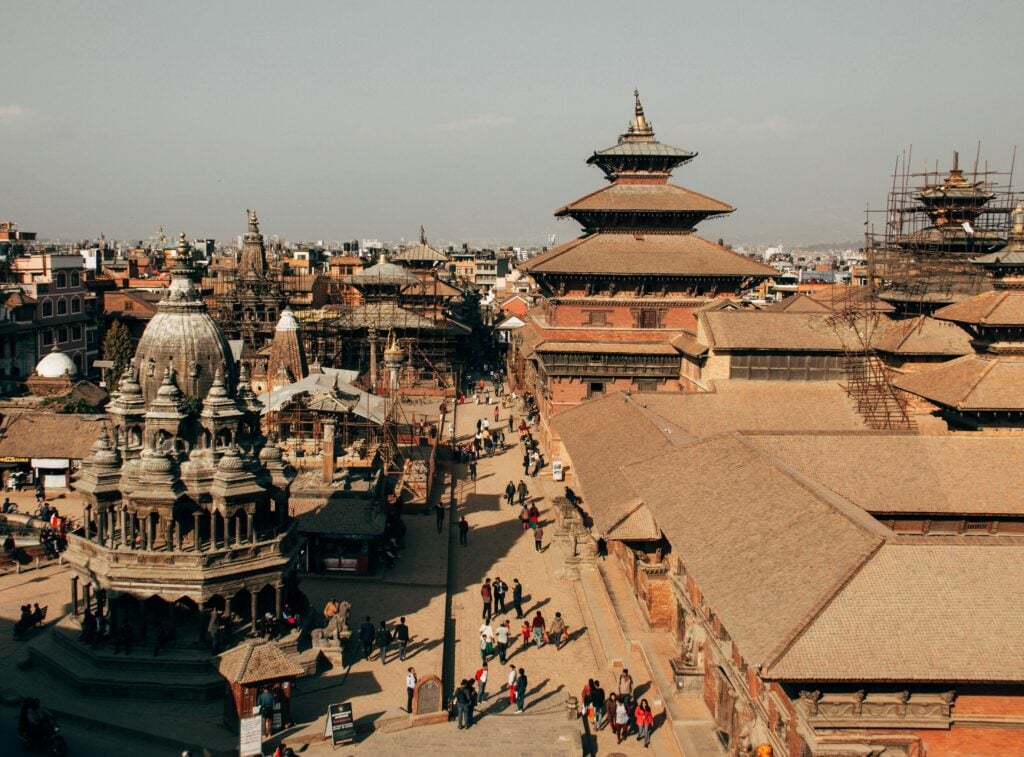
In the evening, stay for dinner at Drishya Restaurant, a multi-storey spot directly overlooking Patan Durbar Square itself, best timed for just after sunset when the temples are lit up below. It’s a touch pricier than elsewhere in Patan, but the view earns it.
Nepal’s nightlife culture skews conservative overall, and dance clubs in particular carry a reputation worth being cautious about, so a relaxed dinner with a view is a better bet here than chasing a big night out.
Day 4: Bhaktapur or Nagarkot, Then Onward
For your final day, choose between two very different half-day trips, both easily done before an evening flight or onward journey.
Bhaktapur, roughly 12km east of Kathmandu, is the best-preserved of the valley’s three medieval cities, largely pedestrianised, with pottery squares, temple complexes, and a slower pace than Kathmandu or Patan. It rewards a guide who can walk you through the layered Newari history rather than a solo wander.
If you’re here around lunchtime, Mayur Restaurant in Dattatraya Square is a genuine find, a leafy, courtyard restaurant with a strong vegetarian menu, tucked beneath a small wooden handicraft gallery worth a browse before or after your meal. For a sit-down with a view, Namaste Restaurant near Taumadhi Square looks straight out onto the five-tiered Nyatapola Temple, and does a solid Nepali thali if you want one more proper meal before heading back.
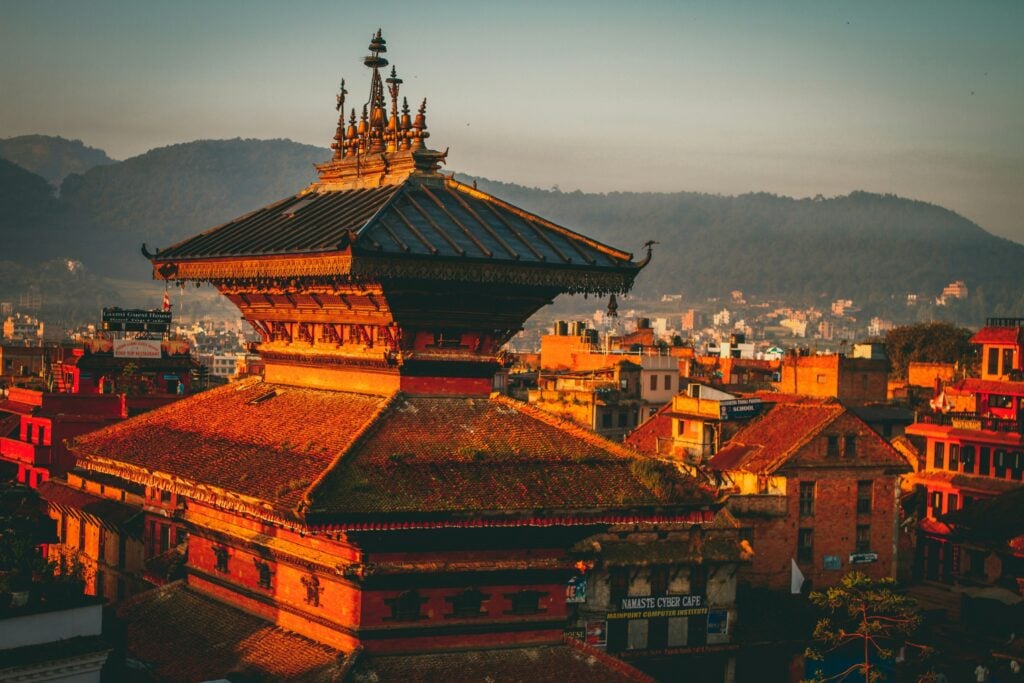
Alternatively, Nagarkot, about 32km east, is the valley’s classic sunrise viewpoint, on a clear day the Himalayan range, including views toward Everest, unfolds along the horizon. It’s best done as an overnight rather than a rushed day trip if you want the dawn light at its best.
If you have more time and appetite for Nepal beyond the valley, Chitwan National Park (around 4 hours by road) offers jungle safaris with a real chance of spotting one-horned rhinos, and Pokhara, gateway to the Annapurna region, is the natural next stop for anyone extending into trekking territory.
Before You Go
Kathmandu rewards travellers who slow down. Traffic, altitude, and the sheer density of history mean this is not a city built for a rushed itinerary, three to four days is genuinely enough to get a real sense of the valley’s three cities, but only if you resist the urge to overpack the schedule. Beyond the temples and stupas, it’s worth remembering Kathmandu is also a working, modern capital, one that has been through real upheaval in the past year and is rebuilding through it, with a hospitality and trekking industry that remains genuinely welcoming to visitors.
Whether you’re here as a standalone city break or as the gateway to the Himalayas, Kathmandu tends to leave a longer impression than its size suggests. Ke garne, as locals say, what to do, is as much a shrug as it is an invitation to just let the city unfold.
Frequently Asked Questions (FAQ)
Three to four days is enough to see Kathmandu, Patan, and Bhaktapur without rushing, longer if you’re adding a day trip to Nagarkot or Chitwan.
Yes, tourism infrastructure has returned to normal following the September 2025 civil unrest, though travellers should check current government advisories and avoid large demonstrations, which tend to be localised to specific government districts.
September to November and March to May are the two peak seasons, offering the clearest mountain views. Late November, December, and March offer good weather with smaller crowds.
All three were once independent kingdoms in the Kathmandu Valley. Kathmandu is the modern capital, Patan (Lalitpur) is known for fine arts and metalwork, and Bhaktapur is the best-preserved medieval city of the three.
Not strictly, but a guide adds significant value at Bhaktapur and Patan given the depth of Newari history, and is generally required or strongly recommended in restricted trekking regions beyond the valley.
Yes, Kathmandu, Patan, and Bhaktapur alone justify a 3-4 day standalone trip, and Chitwan National Park offers a jungle safari alternative for travellers not planning to trek.