
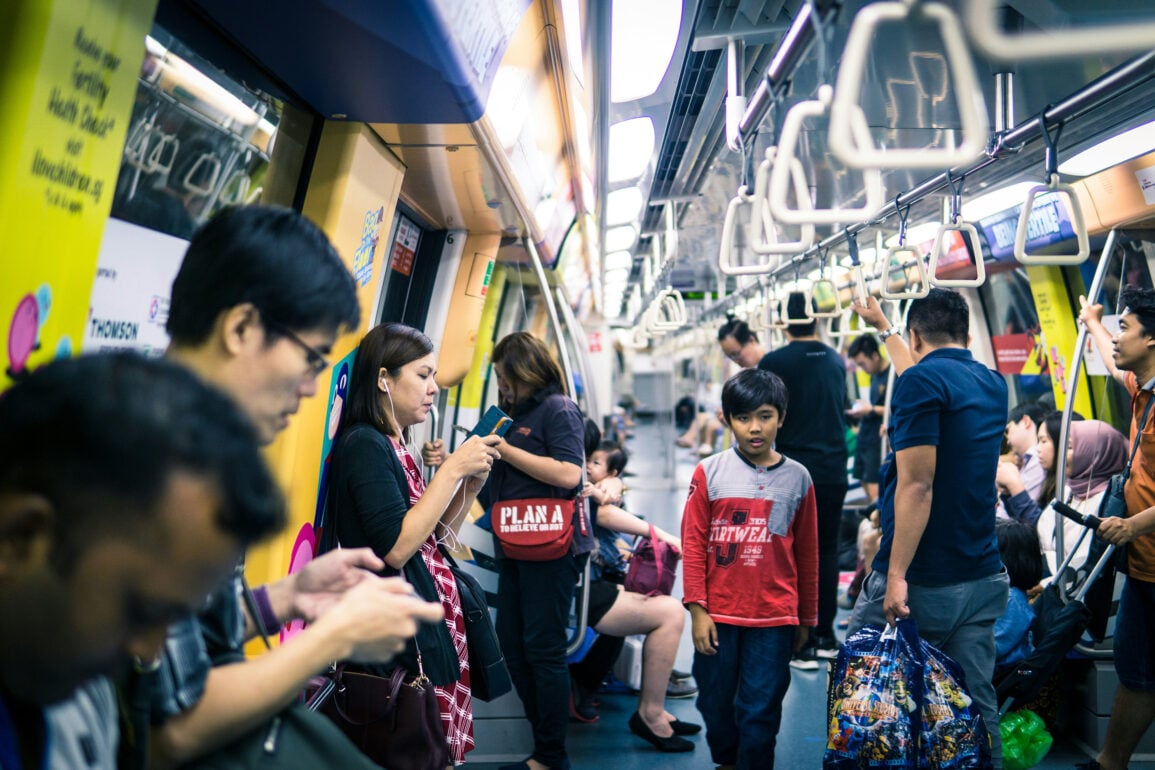

If you board at Downtown MRT after work, you’ll know the feeling: the train arrives, the doors open, and every seat seems gone before you even step in.
But getting a seat on the Downtown Line to the East is often less about luck and more about timing, carriage choice, and where you stand. If you read the flow of commuters properly, you can improve your odds without pushing, rushing, or gambling on random doors.
This guide breaks down the practical patterns regular commuters use, so you can board smarter, spot seat openings earlier, and make your evening ride home a lot more comfortable.
Know Your Route From Downtown MRT Before You Board
If you want a seat, you need to understand what happens on this stretch of the line before the train even arrives.
The key is knowing where the passenger turnover happens.
From Downtown MRT, the eastbound ride begins in a heavy office crowd. At around 5.15 p.m. on weekdays, this is often one of the best windows to board. At that point, there are commonly 3 to 4 seats available per carriage if you choose well and move decisively.
Wait much longer and that number usually drops to 1 or 2 seats, which makes the ride far more competitive.
The route also matters because the early stations shape your chances. Telok Ayer MRT is important because some passengers start preparing to alight there.
Then Chinatown MRT becomes a useful transition point, as some commuters change to the North East Line, opening up another round of possible seats.
So before you board, think in stages:
- Downtown MRT: best chance to enter early and choose a strong position
- Telok Ayer MRT: watch for likely alighting passengers
- Chinatown MRT: expect another seat opportunity from interchange movement
When you know the rhythm of the route, you stop relying on luck and start commuting with a plan.
Pick The Best Boarding Point At Downtown MRT
Where you board matters almost as much as when you board. If your goal is to get a seat from Downtown MRT, avoid standing randomly on the platform.
A useful pattern many regular riders notice is this: there are often more seats available towards the front of the train.
That does not mean every front carriage will be half-empty, but it does mean your odds can be slightly better there than in the middle sections, where many commuters naturally cluster.
Arrive on the platform with enough time to position yourself properly.
Trains on this stretch often come at around 2-minute intervals, so there is no need to panic. It is better to line yourself up at a promising carriage than to rush into a crowded one just because it stops nearest to you.
A good boarding approach is simple:
- Aim for the front carriages rather than the centre.
- Stand where boarding is orderly, not where crowds are bunching.
- Enter quickly but calmly so you can scan seats as soon as you step in.
- Commit to your carriage choice instead of hesitating at the door.
Small platform decisions make a big difference. The right carriage gives you a better shot before the rest of the crowd has even settled in.
Time Your Departure from Office To Beat The Biggest Crowd Surges
Peak hour is not one solid block. It has waves, and if you board between those waves, your chances improve sharply.
For many office workers leaving Downtown station, 5.15 p.m. is a sweet spot. It is early enough that the biggest post-work surge has not fully built up, yet late enough that trains are already moving with steady frequency.
At this time, you may still find 3 to 4 seats per carriage.
If you miss that window, the next period can get tougher.
After that early release wave, seats usually become much scarcer, often dropping to 1 or 2 available seats per carriage.
That means you need stronger positioning and faster reactions.
There is, but, another useful option: 7.30 p.m.
By then, trains are usually much emptier, and it is common to find 5 to 6 seats available. If your schedule allows a later departure, this can be the easiest way to trade a slightly later journey for a much more comfortable one.
Practical timing guide
- Best early window: around 5.15 p.m.
- Most competitive period: shortly after the first office exit rush
- Best late option: around 7.30 p.m.
If you can control when you leave, timing alone may be your biggest advantage.
Use Smart Positioning Instead Of Rushing For Seats
Getting a seat is not about charging at the nearest empty spot. It is about being in the right place before the opportunity appears.
Once on board, do not stay glued to the train doors if your aim is to sit. Instead, position yourself near the seating bays. That gives you a better angle to spot who may be alighting at the next station and lets you move only a step or two when a seat opens up.
This matters especially near Telok Ayer MRT, where passengers often prepare to get off. If you remain by the doors, you may be blocked by others who are already standing beside the seats.
Cues to watch for
Experienced commuters often spot seat openings before they happen. Look for subtle signs such as:
- someone touching their bag strap
- someone looking left or right repeatedly
- a passenger shifting forward in their seat
- phones being put away just before arrival
These are often reliable signals that the person is about to alight.
Your goal is not to hover awkwardly. Just stand naturally within reach, stay aware, and move politely when the seat frees up. Calm positioning beats aggressive rushing almost every time.
Adjust Your Strategy If You Board Near Telok Ayer MRT Or After The CBD Stretch
If you do not board at Downtown MRT, your seat strategy needs to change. By the time the train reaches Telok Ayer MRT, some of the easiest first-pick seats may already be gone. But that does not mean your chances disappear.
At Telok Ayer MRT, the best move is to board with intention and place yourself near seated passengers rather than near the doors. This station often creates small but real seat turnover, especially from CBD workers making short hops.
Then comes Chinatown MRT, which is a genuine window of opportunity. Because some passengers switch to the North East Line, you may see several seats open in a short burst. If you have positioned yourself carefully one stop earlier, you can benefit immediately.
If boarding after Downtown MRT
- At Telok Ayer MRT, prioritise proximity to seating bays.
- Stay alert through arrival into Chinatown MRT.
- Expect interchange passengers to move quickly.
- Do not drift back towards the doors unless you are alighting soon.
This stretch rewards patience and observation. You may not get the first available seat, but with the right setup, Chinatown can change the whole ride.
Plan Around Work Patterns, Office Areas, And Reverse Commutes
A surprisingly effective way to improve your commute is to think like the crowd. Office patterns shape train patterns.
Stations around the CBD, including Downtown MRT and Telok Ayer MRT, serve large concentrations of corporate towers, business districts, and serviced office spaces such as CoWorkSpace at 6 Raffles Quay, JustCo at Hong Leong Building, or The Executive Centre at One Raffles Quay.
These locations create fairly predictable passenger waves. People in traditional offices often leave in clusters around standard end-of-day timings, while those in flexible workplaces or serviced office settings may leave in more staggered groups.
That matters because not all weekdays behave the same. Midweek evenings can feel busier, while some Mondays and Fridays may be slightly more forgiving depending on hybrid work schedules.
Use these work-pattern clues
- If your office hours are flexible, leave before the main release wave.
- If you work in or near a Serviced Office district, expect less uniform crowd flow but sharper mini-surges.
- If possible, travel during a softer reverse-commute period, when others are still finishing work, having dinner, or heading elsewhere.
You do not need perfect data to use this well. A week or two of paying attention to office exit patterns can tell you more than any timetable.
Ride Etiquette, Backup Options, And What To Do If You Still Do Not Get A Seat
Even with good timing and positioning, you will not win every day. And that is fine. The goal is to improve your odds, not turn the commute into a competition.
First, keep your seat-hunting polite. Do not block alighting passengers, crowd someone who is clearly still seated for several stops, or lunge across other riders.
Good commuting etiquette makes the ride better for everyone.
If you still do not get a seat, use a backup plan:
- move to a less packed section at the next stop if space opens up
- stand where you can lean safely and comfortably
- keep watching for turnover at interchange stations
- if your schedule allows, take the next train, especially when services arrive every 2 minutes
And if comfort is your priority after a long day, consider shifting your departure to 7.30 p.m., when trains are often far emptier.
The best commuters are not the most aggressive. They are the ones who understand the pattern, stay calm, and make better choices one stop at a time.
If you want a seat from Downtown MRT to the East during peak hours, focus on three things: timing, carriage choice, and positioning. Board around 5.15 p.m. if you can, aim for the front of the train, and stay near seating bays at Telok Ayer MRT and Chinatown MRT.
If that timing does not work, 7.30 p.m. is often a much easier ride. Use the pattern consistently, and your evening commute should become a lot more comfortable.